

Please note that this post contains affiliate links and any sales made through such links will reward MageeNews.com a small commission – at no extra cost to you.

Imagine this, if you will. You’re a young dad. Three children, 3, 5 and 7. They’re not in school or daycare because the schools and daycare centers in your state have been closed down because of COVID-19, a coronavirus that spreads from person to person and that has already infected more than 150,000 people and killed more than 2,200 people in the United States alone.
Your wife, meanwhile, is in the next town taking care of her mother who is seriously ill. Several months ago, your car broke down and you had to spend your last cent getting it fixed. Oh, and you just got laid off because of COVID-19 shutdown orders.
You turn on the water, and nothing comes out of the spigot. You were afraid this would happen. After all, the utility district has sent you notices that you were delinquent in paying your bill and that they would be shutting off your water. They didn’t seem interested that you had had to spend so much money to get your car repaired.


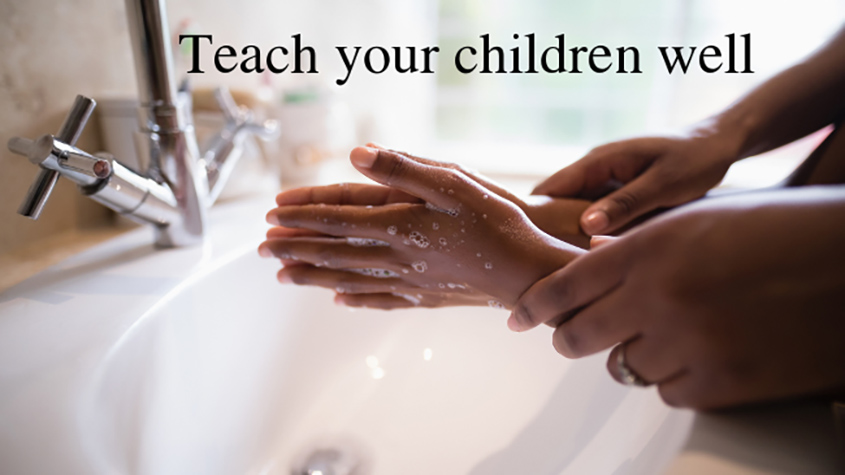
Ordinarily, this would be a major headache. But it’s different now. You panic. Everything you hear or read tells you that you need to wash your hands with running water and soap for at least 20 seconds as a way of to prevent the spread of coronavirus. All of this is true for your children too. You don’t want to come down with COVID-19. And you don’t want to pass it on to them or anyone else.
This is the nightmare many people faced before health officials began realizing that cutting water off for any reason at all posed a serious community health risk. And this is the nightmare some people are still facing. With all of the talk about where the virus was spreading, how many people were catching it, and how many people were dying from it, the issue of water cut-offs was in the background.
But then the problem made its presence felt. Big time. This was serious — even life-threatening. Some governors and city officials started calling for waivers for unpaid bills. And some water providers even went so far as to turn water back on that had been shut off.
In the United States, there are 151,000 public drinking water systems, which are either run by private companies, municipalities or regional collectives. Each one must abide by state and local laws.
In other words, it will be up to local governments and utility executives to decide whether or not to halt shut-offs until the crisis eases.
Keenly aware of just how serious this is, several lawmakers have urged water providers to stop disconnecting water service, saying that they were adding to the dangers created by COVID-19.
“Access to clean water is a basic human right at all times, but any action that restricts families’ access to water during the current coronavirus outbreak would be reckless in the extreme,” House Energy and Commerce Committee Chair Frank Pallone, D-NJ, and House Transportation and Infrastructure Committee Chair Peter DeFazio, D-OR, said in a statement to the utility companies.
A dozen other members of Congress put the federal government in their sights, signing a letter to House and Senate leadership that calls for the federal government to work with local and state leaders to put a national moratorium on water shut-offs into place and restore service for any disconnected households.
“It is unconscionable that during an infectious disease outbreak, like with the coronavirus, communities would continue to shut off people’s access to water,” the letter says. “Surely, in the richest country in the world, we can ensure that every American has access to safe and affordable water.”
The federal Environmental Protection Agency has also stepped into the fray, saying that there’s no higher priority for the agency than protecting the health and safety of Americans.
In a recent press release, it gave assurances that the COVID-19 virus has not been detected in drinking-water supplies and that based on current evidence, the risk to water supplies is low. Americans can continue to use and drink water from their tap as usual.
But the agency also said it supports states and cities that have already taken proactive measures to ensure continued access to clean water for drinking and handwashing during the COVID- 19 pandemic.
“Many drinking water systems are discontinuing service cut-offs, restoring service to customers whose service was previously cut-off, and refraining from imposing penalties for nonpayment,” says the press release. “EPA recommends widespread adoption of these practices, which provide critical support for public health.”
 In a letter to the country’s 50 governors, EPA said: “Ensuring that drinking water and wastewater services are fully operational is critical to containing COVID-19 and protecting Americans from other public health risks. Handwashing and cleaning depend on providing safe and reliable drinking water and effective treatment of wastewater.”
“The most important public thing that we can do is washing our hands,” said Dr. Georges C. Benjamin, executive director of the American Public Health Association. “But that’s hard to do, if not impossible, without running water. A moratorium on cutting off people’s water, right now, should be a top priority.”
While hand sanitizers can help, health officials say that washing your hands with soap and water works the best because the soap helps break down the chemical structure of the virus.
Nationwide
Almost 90 cities and states across the United States have suspended water shutoffs for residents unable to afford their bills. These include Cleveland, Memphis and San Diego and seven states — Wisconsin, New York, Connecticut, New Jersey, Pennsylvania, Illinois and Louisiana.
A handful of private water companies, which supply about 15 percent of Americans, have suspended shutoffs. While this is good news, a troubling number of water departments have have only committed to halting new shutoffs. This means that potentially hundreds of thousands of poor and struggling Americans will be going without running water during one of the worst public health crises in modern history.
While Seattle and some other cities in King County, WA, have suspended shut-offs, other communities have only committed to being flexible with customers who are behind on payments.
Although a recent news report said that Kirkland, WA, where several coronavirus cases have been tied to a nursing facility, has not put a moratorium on water shut-offs, Kirkland Mayor Penny Sweet told Food Safety News that “We’re not going to cut water off.”
“We’re all under a lot of pressure to keep clean and do healthy things to survive,” she said. “We’re going to mitigate whatever and wherever we can.”
In Oregon, Portland Mayor Ted Wheeler declared a state of emergency and announced that Portland Water and the Bureau of Environmental Services “will not disconnect water service for non-payment of sewer, storm water, and water bills during the city’s State of Emergency.”
In Arkansas, officials at Central Arkansas Water said they understand that water is critical in the fight against the spread of coronavirus. “To ensure everyone is able to practice good hygiene, we suspended water shut-offs and worked over the weekend to restore service to all.”
In Tempe, AZ, officials said that the city “understands that some families may have difficult life situations right now because of coronavirus impacts on employment. For this reason, the city will not disconnect residential water service for those with overdue accounts until further notice. Households with existing water disconnects will have their service restored as well.”
According to Food and Water Watch, a not-for-profit environmental advocacy group, the highest shutoff rates were concentrated in southern or rural states including Louisiana, Arkansas, Florida and Oklahoma. Poverty and high unemployment rates figured into the equation.
A recent survey by Food and Water Watch collected shut-off rates from the two largest water utilities in each state, and it found that at least 500,000 households — roughly 1.4 million people — lost water service in 2016.
That had some people referring to the situation as an “affordable-water crisis.”
Before the COVID-19 outbreak, only 10 U.S. cities, among them New York, Flint, MI, and Baltimore, MD, had banned water shutoffs.
Corona virus and food safety
The federal Food and Drug Administration says that among the most common questions people are asking is: Can coronavirus spread from someone handling food who has contracted the disease?
The agency says that at this time, there is no evidence to support transmission of COVID-19 by food.
“Coronaviruses are generally thought to be spread from person-to-person through respiratory droplets,” the FDA says.
“This is not a foodborne gastrointestinal virus,” said Frank Yiannas, top food safety administrator at the FDA.
However, the Centers for Disease Control and Prevention has previously reported that COVID-19 can live on cardboard for hours and on hard surfaces such as stainless steel and plastic for three days.
Even so, Yiannas stressed that person-to-person transmission is the main route for the virus. He also said people can contract coronavirus by touching frequently touched surfaces and then touching their faces.
But that doesn’t mean that preventing infections from foodborne pathogens and from coronavirus doesn’t share some similarities, chief among them the need to wash your hands.

Jim Mann, executive director of the Handwashing For Life Institute, told Food Safety News that “running water is mission-critical in our nation’s war on coronavirus.”
“Handwashing with soap and water is THE frontline weapon of choice.,” he said. “This is the time to discontinue water service cutoffs and restore service to those previously cut off for non-payment.”
“Contaminated hands are the enemy of home health and its primary food safety measures starting with water/soap handwashing,” he said, adding that if handwashing can’t happen at home, “What chances do we have in asking for frequent away-from-home handwashing?”
(